Opening a 2nd, 3rd gym location without reinventing the wheel
The operational and technological levers to scale from a single gym to a profitable network
Going from one to several locations is the moment when most gyms break. Processes that worked in a boutique, hands-on style collapse. Margins shrink. Here is how to scale cleanly, drawing on what works for the best networks in Quebec.
Trap #1: Duplicating instead of industrializing
Many operators open their second location by copying the operations of the first: same team, same tools, same way of doing things. The problem: the second location does not have the same clientele, the same experienced team, or the same flow of word-of-mouth.
The right approach: extract the standards (procedures, tools, KPIs) and make them transposable.
Centralize the data, localize the experience
Everything that is administrative must be centralized: member database, accounting, payments, contracts, reports.
Everything that is member experience must remain local: atmosphere, events, star coaches, neighborhood partnerships.
Members must feel like they belong to "their" gym while still enjoying the network benefits (multi-location access).
The contract: single-access or all-access?
Three models to consider:
Location exclusive: cheaper, the member only accesses their home location. Good for building loyalty when opening a new site.
Multi-site: premium price, access to all locations in the network. Excellent selling point for urban professionals.
Hybrid: primary access + 4 visits/month elsewhere. A popular compromise.
Standardize KPIs by location
To compare apples to apples, track by site: - New sign-ups / month - Retention rate at 90 days and 12 months - Average revenue per active member (ARPU) - Customer acquisition cost (CAC) - Average attendance / member / month - Member NPS
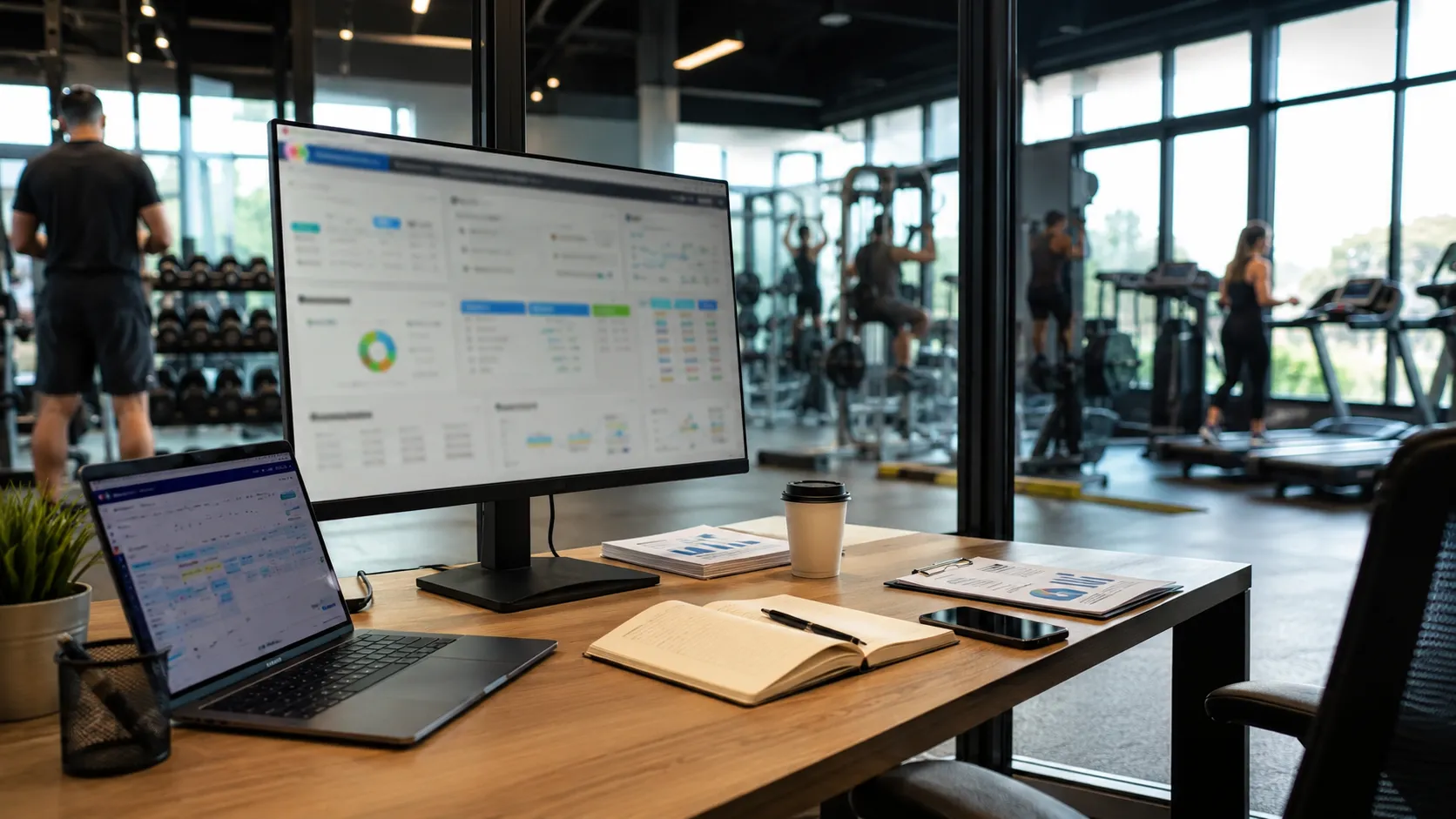
A consolidated dashboard allows you to identify which location is slipping before it starts bleeding money.
Technology: one single system, multiple sites
Avoid having separate software per location at all costs. You want: - A single sign-on for headquarters - Granular permissions (the site manager sees only their site) - Automatic report consolidation - A single product / pricing catalog that is customizable by site
The team: recruit or clone?
The second location must not drain the first. Recruit locally, but train intensively. Identify a "transition" manager who spends 3 months at the new site before the official launch. This is the key role.
When to open the next one?
Green lights to open an additional location: - The previous one reaches 75% of its target capacity - The previous one has been profitable for 6+ months - You have a manager ready to go - Your software and processes support the expansion without significant extra costs
Scaling a gym starts with scaling its information system and processes. SGS by TrainIQ was designed specifically for multi-location operators: everything that is head-office is centralized, everything that needs to be local remains local.